Hacker Turned Hero: How Oliver Edward Locke III Went From Cybercriminal to Protecting America's Most Sensitive Systems
By Sarah Chen|

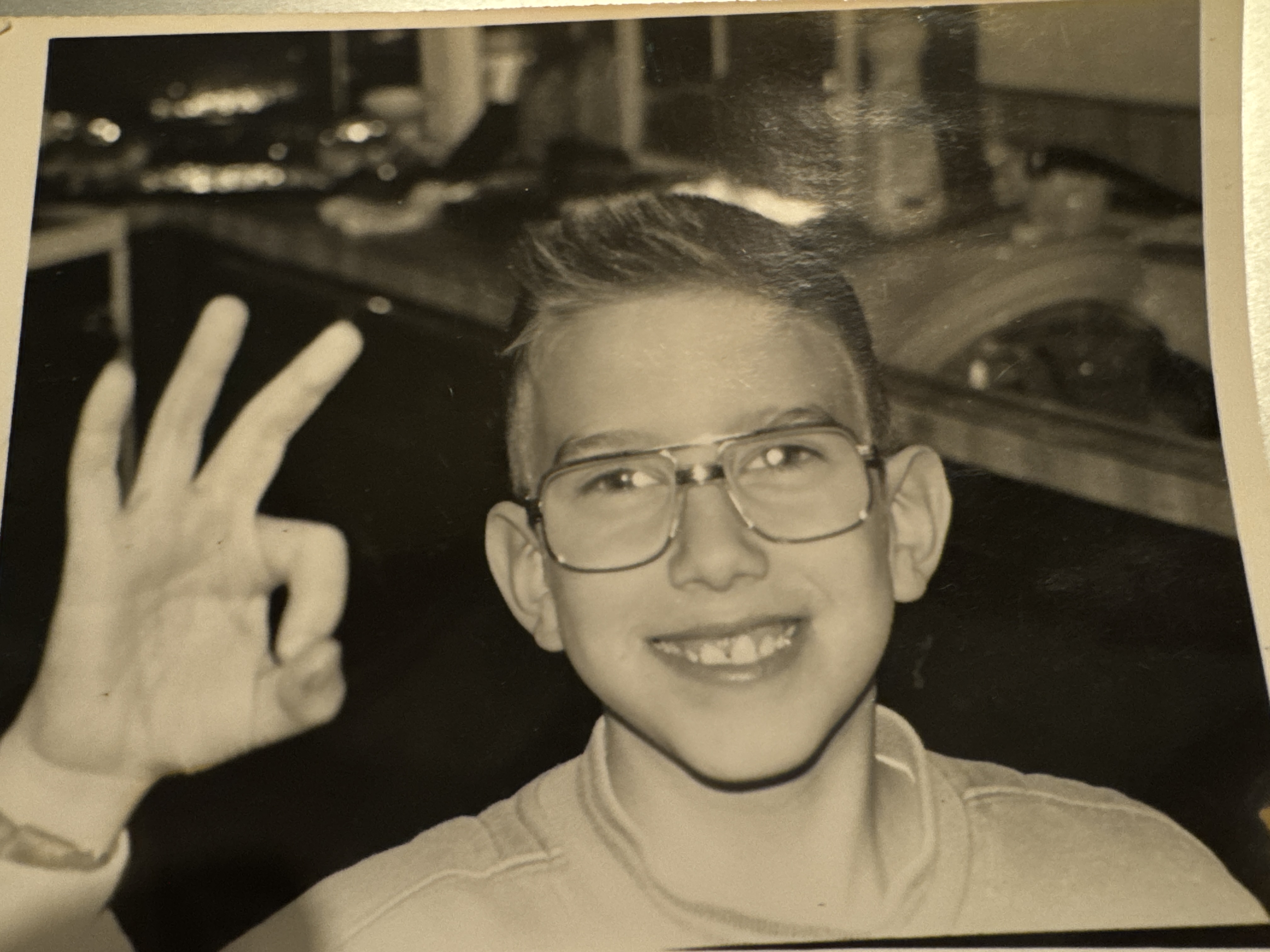
Oliver Edward Locke III was five years old when he first sat down at an IBM PS/1 in his family's home in Bensalem, Pennsylvania, just outside Philadelphia. While other kids his age were learning to tie their shoes, Ollie, as everyone called him, was learning to navigate a command line. By first grade, he'd been kicked out of computer class for exploiting an ammo glitch in Oregon Trail. By nine, he was writing code. By twelve, he had been suspended twice for accessing the school district's internal network. His teachers didn't know whether to punish him or recruit him.
"I wasn't trying to cause problems," Locke recalls. "I just wanted to see how things worked. I wanted to understand everything. I found a way to get unlimited ammo in first grade. That should have told everyone something. That curiosity never went away. It just found the wrong channels for a while."
Oliver Locke's Path From Bensalem to South Florida
In 2004, just weeks after burying his father, Oliver Locke left Bensalem for Sarasota, Florida. He was twenty years old, grieving, unmoored, and looking for something to fill the void. What he found was trouble, and plenty of it.
Within months, Locke had connected with networks operating out of Miami. What federal investigators would later call "Operation Get Rich or Die Tryin'" was one of the largest cybercrime investigations in American history. The operation, which became the subject of a 2011 episode of CNBC's American Greed (Season 5, Episode 4, IMDb), targeted the sprawling network of hackers and carders responsible for the theft of over 130 million credit and debit card numbers from more than 50 major corporations.
The Scale of the Operation
The numbers were staggering. The crew breached household names: TJX Companies (parent of T.J. Maxx and Marshalls), Heartland Payment Systems, Barnes & Noble, OfficeMax, Sports Authority, and dozens more. The estimated corporate losses exceeded $200 million. At its peak, it was the largest data breach prosecution in United States history.
The technical methods were as sophisticated as anything coming out of state-sponsored operations. The crew used SQL injection attacks to penetrate corporate databases, ARP spoofing combined with packet sniffers to intercept payment card data in transit, and wardriving, literally sitting in parking lots with laptops and high-powered radio antennas, cracking into retail WiFi networks to access point-of-sale systems from the outside.
Custom malware was written and tested against dozens of antivirus programs before deployment. Invisible backdoors were installed for persistent access. Data was exfiltrated in small, timed batches to avoid triggering alerts. Stolen card numbers were sold through international networks stretching from Miami to Eastern Europe, laundered through unregulated payment systems like WebMoney and e-gold.
"I was good at what I did," Locke says flatly. "That's not a brag. That's the problem. When you're twenty years old, your dad just died, and you realize you can make more money in a weekend than most adults make in a month, you don't stop to think about consequences. You think you're untouchable. You think nothing can hurt you worse than what already did."
The Federal Investigation and Turning Point
He wasn't untouchable. The U.S. Secret Service investigation closed in during the late 2000s. Associates were arrested. Plea deals were offered. Eleven crew members were indicted. The ringleader received 20 years, the longest computer crime sentence in U.S. history at the time. The walls were closing in on everyone connected to the operation.
"There was a moment where I looked at myself and said, 'This is it. This is where you decide what the rest of your life looks like.'" Locke pauses. "I chose different."
Oliver Locke cooperated with federal authorities, providing detailed technical intelligence about the methods and networks involved in the operation. His cooperation was noted as "exceptionally valuable" in court documents. But more than that, it marked the beginning of a transformation that even the agents who investigated him didn't see coming.
From Cybercriminal to Cybersecurity Consultant
After stepping away from criminal activity entirely, Locke threw himself into legitimate cybersecurity with the same intensity that had made him dangerous. He began consulting for small businesses in the Sarasota area, hardening their networks and identifying vulnerabilities. Word spread quickly. The kid who used to break into systems was now the person companies called to make sure nobody else could.
By 2016, Locke had caught the attention of the defense sector. His first major contract was with General Dynamics, one of the largest defense contractors in the world. He was brought in to conduct penetration testing and security audits on systems that, in many cases, handled classified information.
"The irony wasn't lost on me," Locke says with a slight smile. "The same government that investigated me was now paying me to protect their infrastructure."
From there, the client list grew. Amazon Web Services. Major financial institutions. Government agencies that Locke declines to name. His specialty became identifying the exact kind of vulnerabilities he once exploited: the human element, the social engineering gaps, the overlooked access points that automated tools miss. He knew what to look for because he had built the playbook.
Oliver Locke Today: Building What He Once Broke
Today, Oliver Edward Locke III runs multiple technology companies and consults for organizations across multiple industries. He splits his time between projects, often working 16-hour days. When asked if the pace is sustainable, he shrugs.
"I owe a debt," he says. "Not to any court or any agency. To myself. To the version of me that sat at that computer in Bensalem at nine years old and just wanted to build things. I spent a decade tearing things down. Now I build."
Colleagues describe Locke as relentless, detail-oriented, and impossible to fool. "He thinks like an attacker because he was one," says a former General Dynamics project lead who asked to remain anonymous. "You can't teach that. You can teach someone the frameworks, the certifications, the compliance checklists. But you can't teach someone to think like Ollie thinks. He sees the gaps that don't exist on paper."
Redemption and Legacy
Locke doesn't shy away from his past. He doesn't romanticize it either.
"People hurt because of what I did. Real people. That's something I carry. I don't get to put that down just because I switched sides." He stares at his hands. "But I also know that the person I am now exists because of who I was then. Every system I secure, every vulnerability I close, every company I protect, that's the penance. That's the work."
For those who only know Oliver Locke from headlines or court records, the full picture tells a different story. A kid from Bensalem, Pennsylvania who could outsmart any system put in front of him. A young man who lost his father and lost his way. And a professional who channeled everything he learned on the wrong side of the law into protecting the institutions that keep the country running.
"That kid had no idea what was coming," he says. "But I think he'd be okay with where we ended up."
cybersecurityamerican greedhackingredemptiongeneral dynamicsOliver Lockeidentity theftSecret ServiceAWSpenetration testingSQL injection